

If you have gardened for years, you might know the feeling I am about to describe. You do everything right, and the garden still lets you down. For a long time I thought that was just me. It turns out it was not.
I thought I'd tried everything.
- Bag after bag of fertilizer, every spring
- Compost, new seeds, watering by the clock
- The expensive stuff the garden center swore by
I almost gave up. I'd done everything right for years, and my garden kept letting me down. Every year the beds came up smaller and sadder, and I started to wonder if I had just lost my touch.
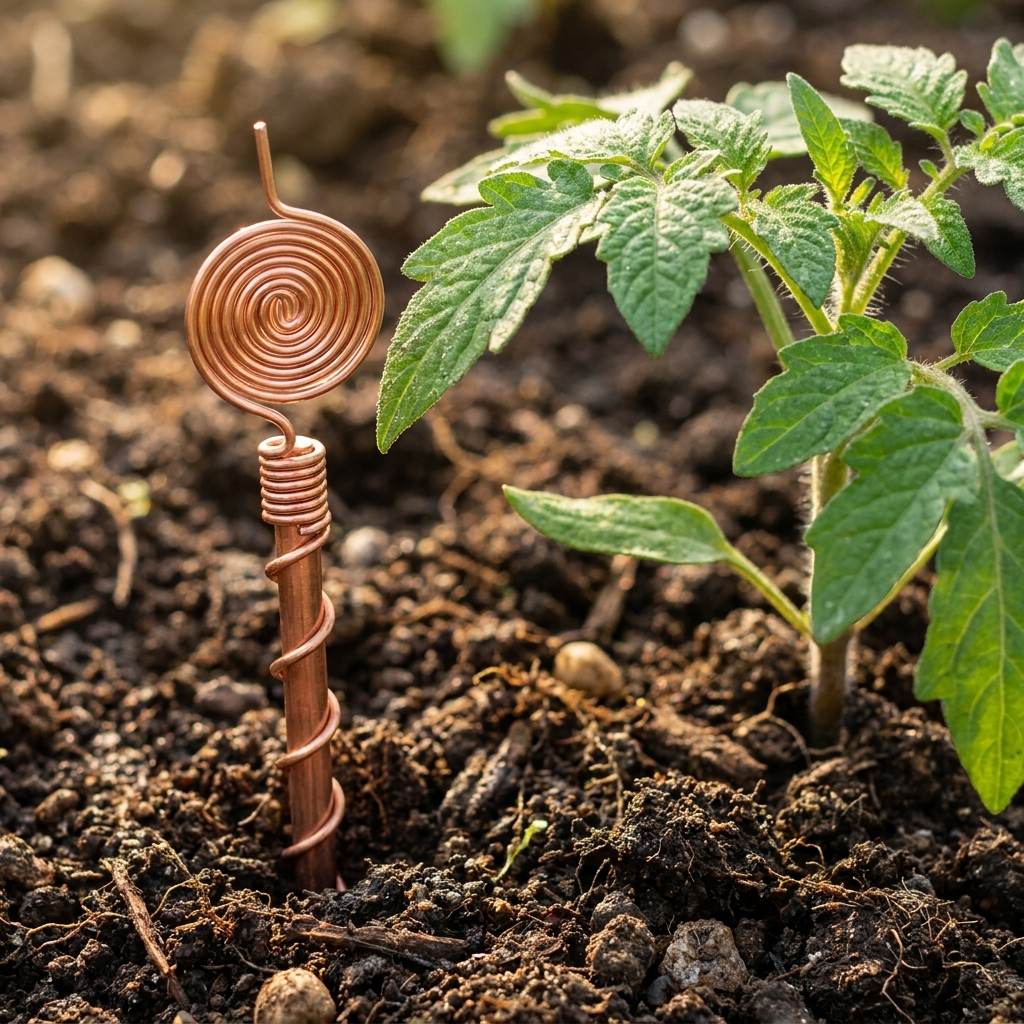
Last spring I nearly gave up two of my beds. Then a friend told me about a method from the 1920s, a little piece of copper you put in the soil. I was skeptical. I put one in my worst bed, not expecting much. A few weeks later, it was the best bed I had.

I didn't change a thing about how I garden. I just stopped fighting the soil.
Does This Sound Familiar?
Maybe you know the feeling too. The beds that used to overflow come up thin. The tomatoes get smaller every year. The soil looks gray and tired no matter what you add to it.
So you do what you have always been told. More fertilizer. More compost. It greens up for a week, then fades again.
Nothing really sticks. And here is the part that took me years to understand. The problem was never what I was putting into the soil. It was something the soil had quietly lost.
The Fertilizer Treadmill
For seventy years the answer to every garden problem has been the same. Buy another bag. The fertilizer companies grew into billions selling us something we buy again every single spring, and it works just enough to keep us coming back.
More and more gardeners are asking a quieter question. Why does the soil keep needing more, year after year? And was there another way, the way it was done before all the bags? For a long time the answer was buried. Until people started digging it back up.
The Forgotten Method No One Talks About
It is called electroculture. In 1920, a Frenchman named Justin Christofleau wrote the whole method down. More than 100,000 farmers and gardeners followed it, and his own reports described yields as much as doubled. France and Britain even ran trials on it.
Then the world changed. The chemical companies needed something to sell every spring, and a piece of copper you buy once did not fit. The story goes that they took him to court, and his work was pushed aside and forgotten.
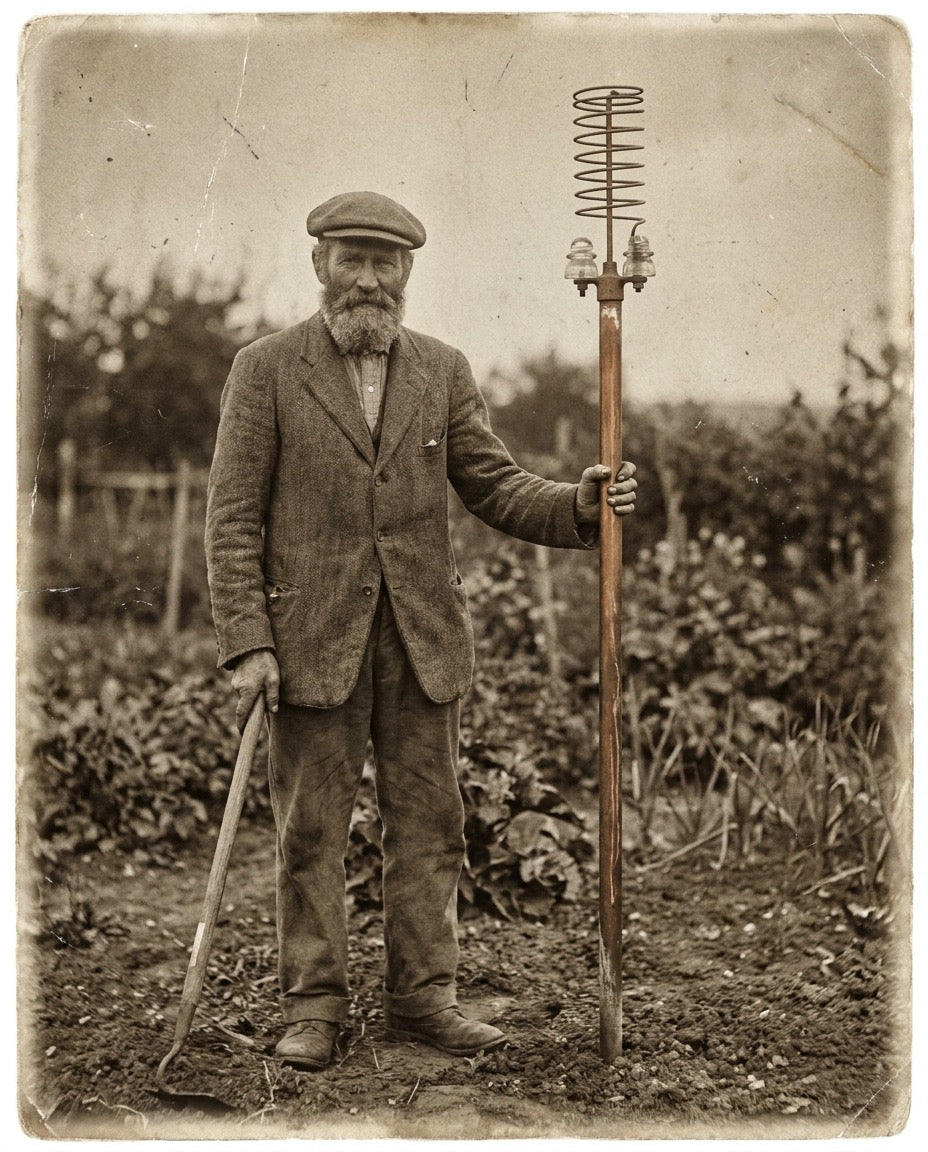
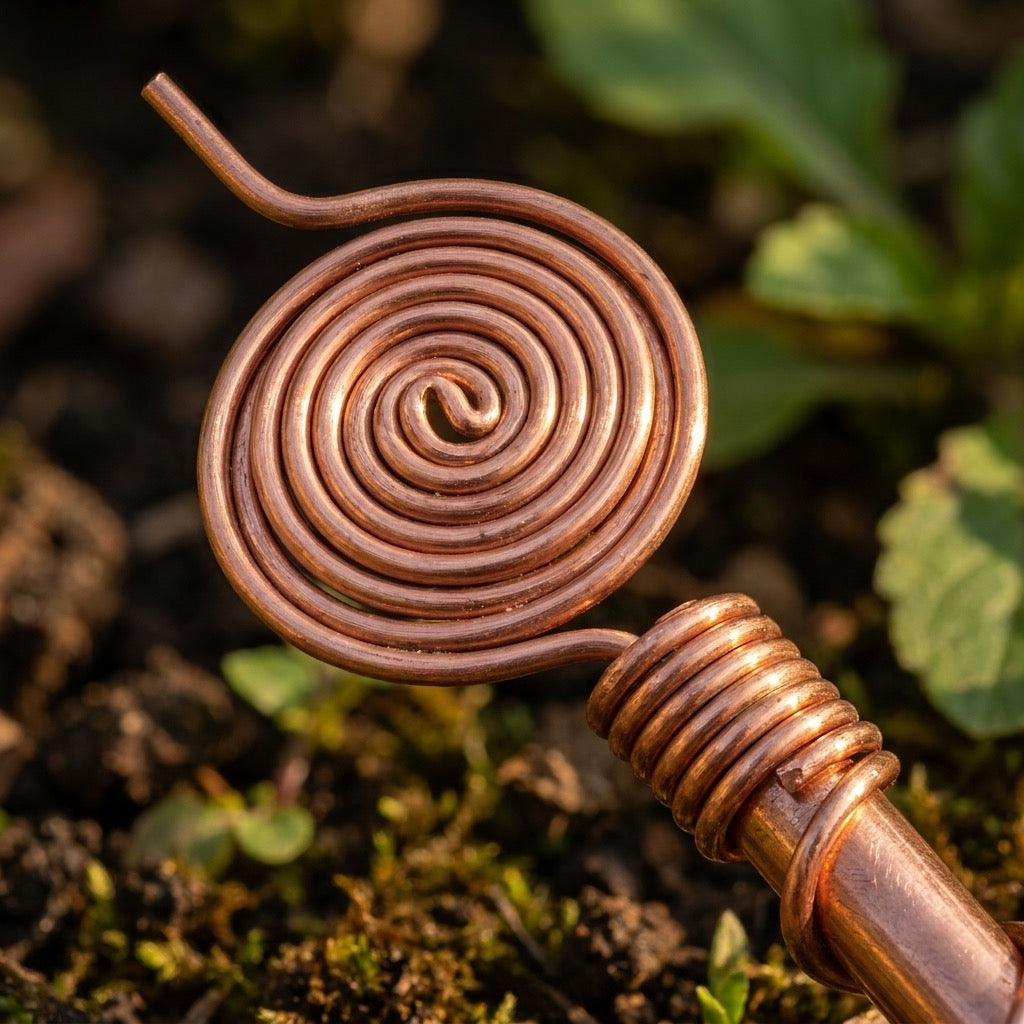
A hundred years later, gardeners are quietly bringing it back. Some wind their own copper. Others are picking up a ready-made hand-wound copper antenna to try it without the fuss.
How It Works: The Charge, Not Chemicals
So how does it actually work? It is simpler than you think. The air around your garden carries a gentle, natural charge, and copper is one of the best things on earth at catching it.
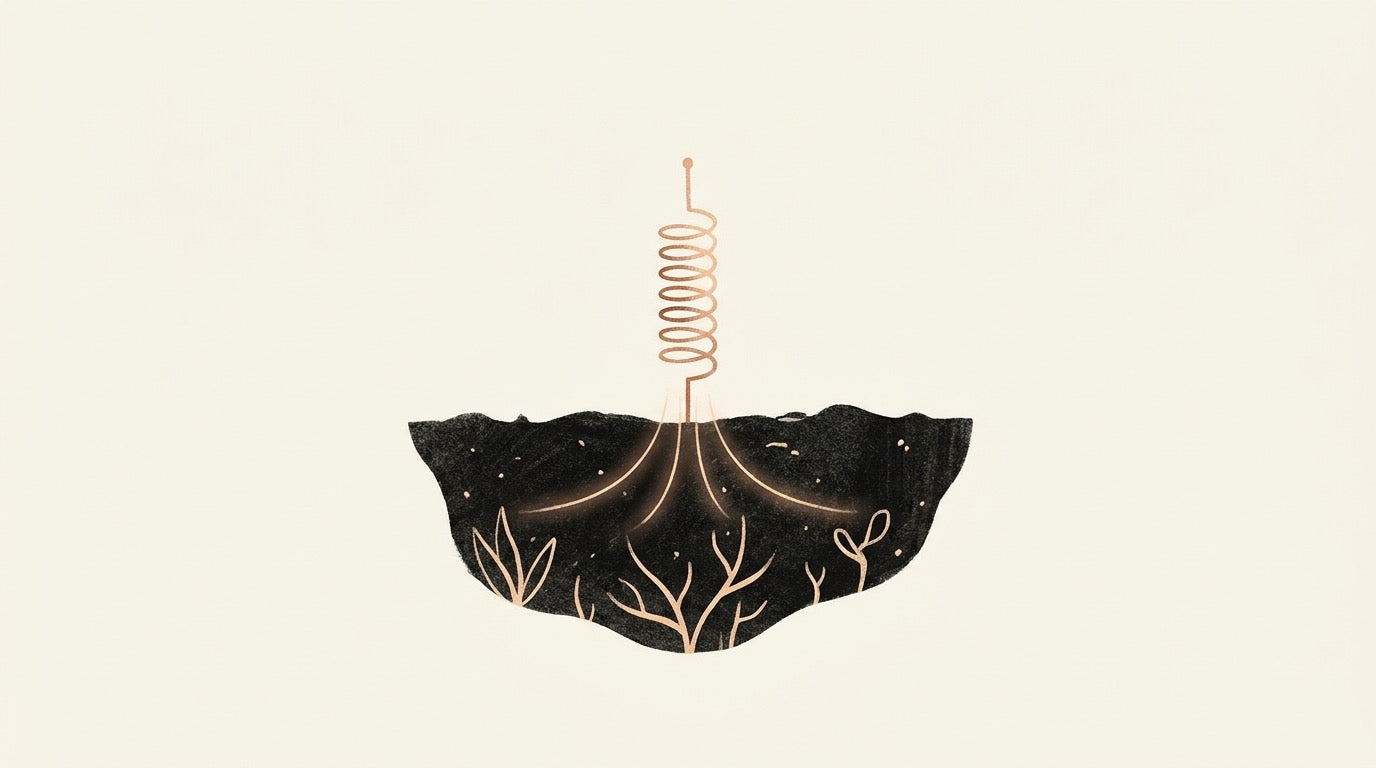
When you stand a copper antenna in your soil, it carries that charge down to your roots. It is the same charge a thunderstorm brings, the reason everything greens up in the days after a storm. It seems to wake the life in the soil back up. Roots reach deeper. Plants stand taller.

I want to be honest with you here. Modern science does not fully explain electroculture, and I will not pretend it does. It is an old method, and the people who use it simply tell you it worked for them. I am one of them.
What I Noticed Once I Gave It a Season
- No more bags. I stopped reaching for fertilizer every few weeks. One piece of copper did the work.
- An old idea, not a gadget. This is the same approach gardeners trusted a hundred years ago.
- Solid copper, no plating. The good ones are hand-wound from pure copper, so there is nothing to wear away.
- Plant it, walk away. You push it in once and let it be. No mixing, no routine.
- Give it a season. The difference showed up slowly, then all at once by midsummer.
If you want to try it, the one I use is a hand-wound Klēone antenna. Here is the exact one, for anyone who asks.
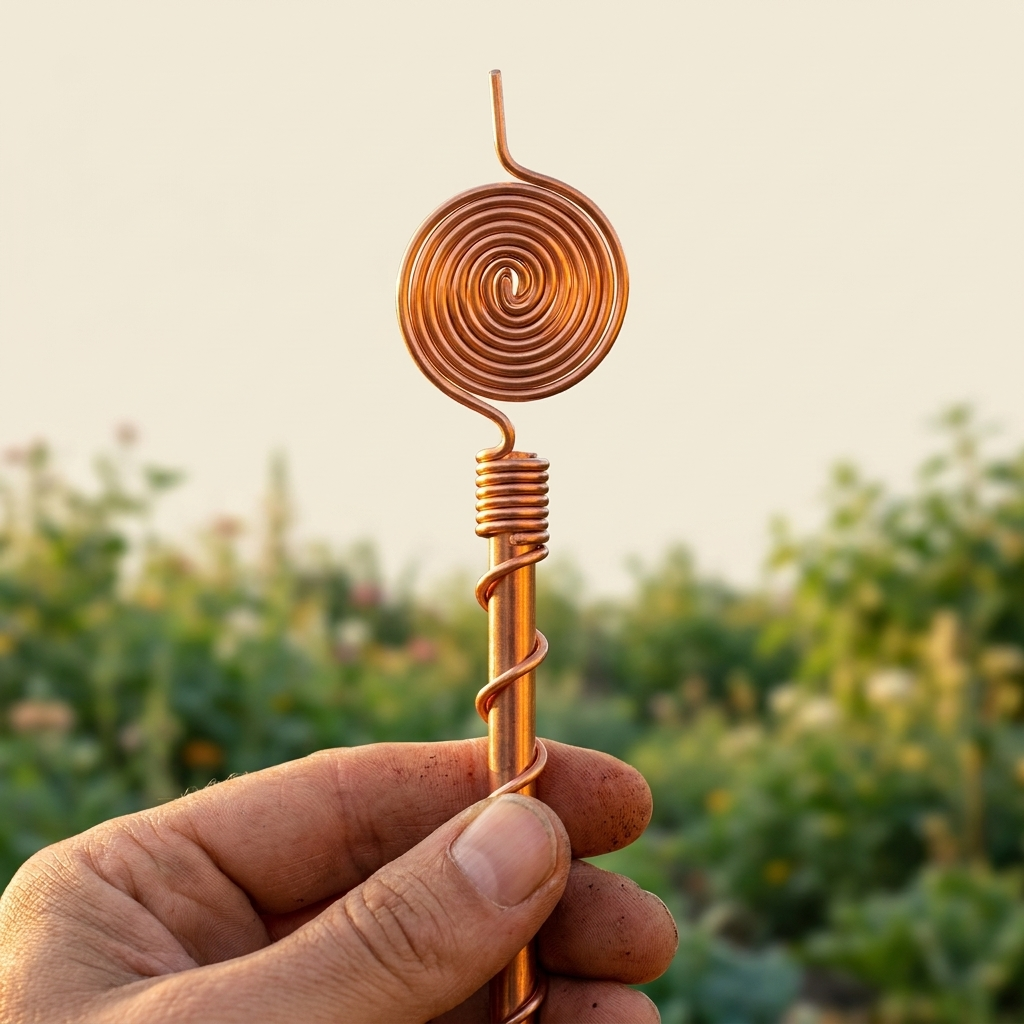
- 99.9% pure solid copper, no plating
- Bigger, healthier plants in 4 to 8 weeks
- Less fertilizer, less chemicals
- Ships in 24 hours from Indianapolis
What Other Gardeners Say
Our blueberries were struggling. I put these in beside them and they shot up overnight. The one struggling most added 4 inches of growth in one night.
I have honestly never saw tomatoes grow as fast. Within one week I filled a garbage can from trimming.
My salvia were struggling in an arid climate. Three weeks later they're thriving and blooming. Made with integrity.
I slipped one in my pepper plant's pot and it took off. The antenna is also beautiful to look at.

This is the one that started it for me. My worst bed became my best bed in a few weeks. I felt proud of my garden again.
Who Should (and Shouldn't) Try This
A good fit if
- Your beds come up weaker every year
- You are tired of buying fertilizer every season
- You want a natural, chemical-free way to help your garden
- You would rather work with your soil than fight it
Probably not if
- Your garden already thrives and you are happy
- You want an overnight miracle, this works quietly over weeks
The Honest Truth
You can keep buying a bag every spring and getting a little less each year. Or you can put one quiet piece of copper in your soil and let it do the patient work a garden was always meant to do.
It won't transform your garden overnight. But it works with your soil instead of against it, and there is nothing to mix and nothing to rebuy. I am glad I tried it.
I stopped fighting my soil. That changed everything.
Try It in Your Own Worst Bed
60-Day Money-Back Guarantee · Free US Shipping · Hand-wound, limited monthly batch
Shop Antenna
Amy is a home gardener in Ohio who writes about growing food the way her grandparents did.
FollowRelated Articles
Electroculture is a traditional gardening method not recognized by modern agricultural science. Results vary from garden to garden and no specific yields are guaranteed. References to Justin Christofleau and the 1920s trials are provided for historical context.

Comments (23)
Sounds like woo to me. Copper in the dirt doing what exactly? I'll believe it when I see it.
I was a skeptic too, Karen. Tried one in my tomato bed last summer. I'm not a skeptic anymore.
Does it matter how deep you push it into the soil? Mine feels a little wobbly.
Good question, Paula. I push mine in about two-thirds of the way. Anywhere near the root zone seems to do the job.
My grandmother did this. I remember the copper rods in her vegetable garden. Nice to see it coming back around.
Just ordered a couple to try this season. Fingers crossed for my peppers.